Why choose ecofriendly paint?
Traditional paint products are made with volatile organic compounds (VOCs) that release toxins into the air as the paint dries, potentially causing health problems and damage to the environment. Some people also experience headaches and dizziness when using traditional paint. The federal government already regulates VOCs in paint, but the new ecofriendly paint products on the market go a step further with reduced levels of VOCs.
What is the difference between low VOC and zero VOC?
Paint that is labeled “low VOC” contains less than 50 grams per liter, while those labeled “zero VOC” or “VOC free” claim to have no measurable VOCs at all.
 Devine Color, an offshoot of Valspar, offers zero-VOC paint in a wide range of colors. The claim is that this paint is so thick, you need only one coat. The website provides lots of color choosing tips and some gorgeous ready-to-go palettes that make decorating a breeze.
Cost: $59.95 per gallon
2. The Old-Fashioned Milk Paint Company has been mixing up real  milk paints in a range of rich colors for more than 30 years. Their paint is completely nontoxic, VOC free and safe for use on children’s items. And yes, it is actually made with milk.
The original formula was meant for use on porous surfaces (like unfinished wood or masonry), but the company recently began offering a version that works for walls. It does take a bit of extra work, as the paint comes in powder form and you must mix it up yourself, but nothing else compares in terms of green credentials.
Cost: $45.95 per gallon
3. Benjamin Moore, the powerhouse of the paint industry, now  offers two green options: Aura, a low-VOC premium paint, and Natura, which is zero VOC and has a short drying time to boot. Big bonus: The entire staggeringly large range of Benjamin Moore colors is available in either ecofriendly option.
When I was pregnant we used Benjamin Moore’s Natura line to repaint most rooms in our house, and I can attest to the fact it is virtually odor free and dries fast. The coverage was good, but not as amazing as the next on our list, C2 Paint.
Cost: $54.99 (Natura), $65.99 (Aura) per gallon
4. C2 Paint is one of my favorite independent paint companies. It  uses artist-grade pigments to create colors that are superrich. And with names like Artichoke Heart, Voodoo and Slinky, they can install the urge to come up with a whole new scheme for your space. In addition to the regular line is low-VOC paint available in all the C2 colors.
When we bought our house, the kitchen was painted a shockingly bright persimmon orange, which I thought would be a nightmare to cover. Lo and behold, a single coat of C2’s puddinglike paint in Quahog (a warm gray) and all traces of the old color were gone.
Cost: $54.99 per gallon
5. Yolo Colorhouse is a small company that offers zero-VOC paints 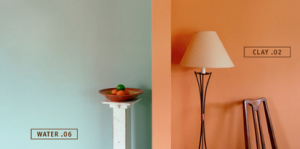 in a limited but gorgeous range of nature-inspired colors. Priced around $35 per gallon, they’re much more affordable than many of the other green options.
Bonus: Yolo Colorhouse paints are now available at Home Depot, so you may be able to have it shipped to your local store for free.
Cost: $35.95 per gallon
 Cliff May’s innovative ranch home designs give him a place of honor in the residential hall of fame. May’s modern homes epitomize the indoor-outdoor lifestyle characteristic of the American Dream, fusing the open plan/open living philosophy with the traditional ranch house. He introduced comfort and convenience into postwar ’50s homes, from motorized skylights and bathroom vanity cabinets to single-lever faucets and whole-house intercoms. Starting in the 1930s, the modern ranch house took the country by storm, migrating from California to Arizona, and Cliff May was the chief proponent of this style. His long, low designs managed to be both modern and traditional, celebrating a casually elegant, indoor-outdoor lifestyle, and drawing inspiration from California’s Spanish Mexican ranchos while embracing the latest technological gadgetry. With their low profile, large carports and garages, patios, and expansive horizontality, May’s modern ranch houses became synonymous with the nascent California lifestyle and were enthusiastically promoted by the popular Sunset magazine throughout the U.S. He personally designed and built more than 1,000 homes and commercial buildings, and over 18,000 designs are attributed to his office, including the Robert Mondavi Winery and the offices of Sunset.
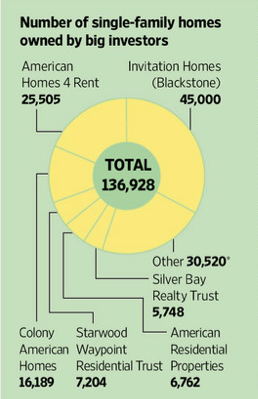 After a buying binge that helped drive the housing recovery, big investors are being forced to rethink the home-rental business.







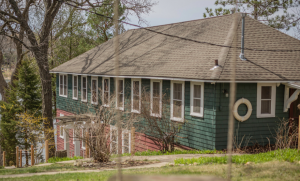 The bunkhouse, which sleeps 24 people and has its own showers, can be rented for $1,000 a night. ‘People who love it here are often people who spent time in their childhoods at camps like this,’ says Ms. Surratt. ‘But also hipsters who want to immerse themselves in a different era.’
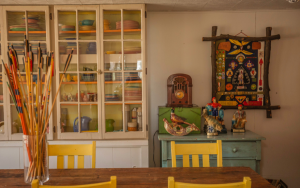 The interior of the tree house. The camp’s rustic-chic style has been profiled in several design publications and blogs. Three luxury product brands, which Ms. Surratt declined to name, have licensed the camp name and plan to release products based on its aesthetic in 2015, she said. The dining area of the lodge. Camp Wandawega doesn’t offer food or other services; campers bring and prepare their own food and share cleanup dutie.
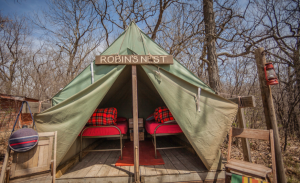 Though the camp offers accommodations so rustic the owners require renters to read a ‘Manifesto of Low Expectations’ before booking, Camp Wandawega was included last year in Travel & Leisure’s World’s Greatest Hotels book. Here is a sleeping tent.